Plutocracy
The Ownership Wars: Who Owns YouPlutocracy is the book’s name for government by the wealthy, especially the billionaire Ownership Class that it identifies as the 1%. It is not treated merely as a possible future arrangement: the United States is described as already an implicit plutocracy, with Donald Trump’s presidency making that underlying order increasingly visible. The decisive contradiction is that a political system formally organized around popular sovereignty can operate through concentrated wealth, inherited power, controlled information, and the consent of people who believe they are choosing freely.
Definition and Political Structure
Plutocracy appears as the endpoint of a class structure in which the rich possess the resources needed to shape public life while the majority remains politically subordinate. The book argues that the wealthy control corporations, major media companies, lobbying networks, and the institutions through which laws and public opinion are produced. George Carlin’s account is used to describe politicians as figures who create the appearance of freedom and choice while the real owners control the important land, corporations, legislatures, judges, and information channels. In this formulation, elections do not remove ownership power; they help conceal it behind the spectacle of representation.
The book places Donald Trump at the center of this diagnosis. As a multibillionaire and senior member of the 1%, he is presented as evidence that the elite is not an abstract conspiracy but a concrete social class occupying the presidency. His inherited wealth is treated as especially significant: the proposed remedy for dynastic rule is a 100% inheritance tax, which the book says would have prevented the continuation of fortunes such as Trump’s. The reference to his inheritance of approximately $300 million from his father, and to his starting position in his father’s real-estate company in 1974 with $40 million, is used to attack the claim that he represents self-made popular success.
Consent, Media, and Political Reproduction
The plutocratic order is maintained not only by direct economic control but also by the production of consent. The book uses Hegel’s master–slave dialectic to explain why a much smaller ruling group can dominate a far larger population: the master is characterized as willing to risk power and use force, while the slave values survival and submission more than the will to power. Applied socially, this becomes an argument that the 99% do not simply suffer under the elite; they repeatedly accept, seek, or even desire elite leadership. The ruling class therefore survives through a combination of superior resources and the majority’s acquiescence.
The account of media power extends this argument into culture and psychology. In discussing Century of the Self, the book describes how capitalism adopted Sigmund Freud’s theory of the unconscious and how Edward Bernays applied techniques of psychological manipulation to peacetime commerce. Advertising turns private desires into profitable behavior, while public relations and mass communication shape the beliefs through which people interpret their political interests. The book therefore treats information as part of the material infrastructure of plutocracy: ownership of media determines which grievances become visible, which explanations appear reasonable, and which demands remain unspoken.
This logic also appears in the discussion of television. The book contrasts the abundance of programs about murder with the scarcity of programs about financial scandals, arguing that taxation and the special arrangements available to the super-rich, banks, and corporations remain obscured because the elite has no interest in public scrutiny of them. The result is a politics in which spectacular crimes receive attention while the quieter mechanisms of economic privilege remain difficult to see.
Taxation, Inheritance, and Class Power
Taxation provides the clearest institutional expression of plutocratic inequality. The book describes two tax systems: one designed around the resources of corporations and the super-rich, who can employ expensive lawyers, accountants, and specialists, and another imposed on ordinary people, who face a complex and punitive system without comparable protection. Its proposed countermeasure is a “virtual corporation” through which ordinary citizens could pool resources and obtain expert assistance, allowing them to resist being separated and intimidated one by one.
The underlying principle is equality before the law. Corporations should receive the same treatment as ordinary people, or ordinary people should receive the protections and advantages available to corporations. The book rejects a system in which there is “one law for the strong, and a different law for the weak,” particularly when the weaker party receives the harsher treatment. It also proposes automatic taxation linked to bank accounts, so that every payment entering an account would be taxed and tax returns could be eliminated. In the book’s view, such a system would make laundering, hiding, offshoring, avoidance, and evasion more difficult.
Donald Trump’s refusal to disclose his tax affairs is consequently framed as a democratic scandal rather than a private matter. Because a president exercises public authority, the book argues that no person in such a role should be permitted to conceal financial information from the people governed by that authority. Tax transparency becomes a test of whether political office remains accountable to citizens or is treated as another possession of the wealthy.
Populism and the Turn Toward Open Rule
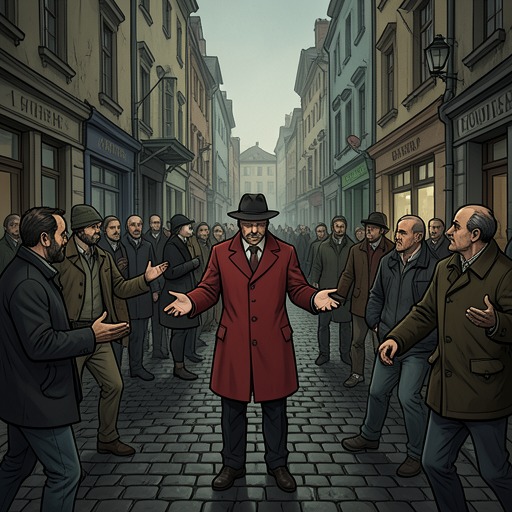
The book presents plutocracy as capable of disguising itself through populism. Donald Trump’s supporters are described as resentful of cultural elites in government, universities, and coastal regions, yet their resentment is said not to be directed against the billionaire class. Instead, it is redirected toward groups positioned below them, especially black and Hispanic Americans. Trump’s promises to restrict unwanted immigrants, build a wall, support the police, and restore a supposedly earlier national greatness are interpreted as appeals to racial hierarchy. The plutocratic leader can therefore preserve class rule by offering parts of the subordinate population a higher place relative to other subordinated groups.
This is why the book describes Trump’s political language as a dog whistle. The stated promise of national restoration is read as a coded promise that blacks, Hispanics, gays, and women will be returned to subordinate positions, allowing white conservatives to feel elevated without challenging the rich ruler above them. The book calls this a version of the slave revolt in morality: anger is directed sideways or downward rather than upward. Those who support the plutocrat are portrayed as wanting recognition from the elite, not the abolition of elite rule.
The danger becomes explicit in the discussion of Trump’s endgame. Bernie Sanders is quoted as arguing that Trump sought a nation moved significantly toward authoritarianism, with extraordinary presidential powers and economic policies benefiting the 1% at everyone else’s expense. The book compresses this warning into the image of Trump becoming “Trumpler,” a dictator of America, and asks where resistance will come from. It also claims that the United States has become openly ruled by a billionaire dictatorship, while the public has still not risen against the alleged tyrants.
Resistance and Narrative Significance
Plutocracy is presented as politically vulnerable precisely because its most visible representative has entered the White House. The book calls Trump’s presidency a catastrophic miscalculation by the elite: if the billionaire leader fails, the fate of the broader rich elite is tied to his failure. The same proximity that gives plutocracy unprecedented visibility also exposes its interests directly, making economic crisis and political abuse appear to land at the elite’s own doorstep.
The book’s proposed alternative is a transfer of power from the 1% to the 99%, expressed through the demand to end the power of the wealthy and begin the power of the people. It invokes mass grassroots resistance against authoritarianism and treats the overthrow of the super-rich as the condition that would make all other social goals possible. Yet its account also insists that resistance must confront the cultural mechanisms that reproduce submission: controlled media, advertising, inherited wealth, unequal taxation, racial resentment, and the public’s repeated belief that a billionaire can rule on its behalf.
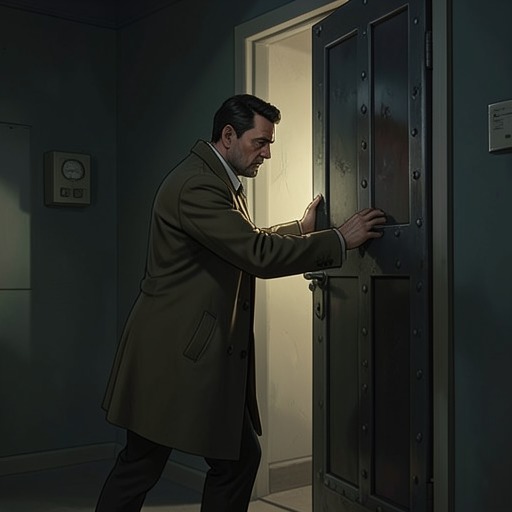
The film They Live supplies a recurring political metaphor for this structure. Its hidden elite has engineered economic collapse, brought the working class near enslavement, and broadcast a subliminal signal that creates false consciousness while concealing the elite’s alien identity. An underground Resistance seeks to hack the signal; when John Nada destroys the broadcaster, humanity finally sees the aliens among it. The book uses this plot to represent the plutocratic system as both material exploitation and concealed perception. The central problem is not only that the rich rule, but that the ruled are prevented from recognizing the arrangement. Plutocracy thus signifies a complete political economy of domination: wealth becomes ownership, ownership becomes influence, influence becomes manufactured consent, and consent makes oligarchic power appear to be ordinary democratic life.